Wednesday, July 24, 2013

Early bird deadline approaching

The deadline for the early bird registration discounted price of $75 is Wednesday, July 31, which is only one week away. On August 1, the price will go up to $89. Click here to register now.

Your registration includes admittance to six, one-hour sessions throughout the day. During each hour, you'll have the opportunity to choose between three different tracks: livestock, gardening, and do-it-yourself. In the livestock track we'll be covering everything from bees to cattle. In the gardening sessions you'll go beyond the basics to discover what you need to know for successfully growing your own produce, such as companion planting, composting, pollinators, and extending the growing season. And the do-it-yourself demonstrations will include soapmaking, canning, and making mozzarella. Click here to check out the complete schedule.

We're also providing morning snacks, lunch, and afternoon snacks. If you prefer a vegetarian lunch, be sure to put that in the comment section of the registration.

And don't forget about the seed swap we're hosting this year. Bring your extra seeds to share with other attendees!

The room block and website conference discount at the Hampton Inn also expires on August 1. After the first, you will still be able to get the discount if rooms are available, but you will have to call the hotel directly. Click here to go the Hampton website and make your hotel reservations now.


Monday, July 15, 2013

Participate in our seed swap!

 Rainbow Inca Corn

If you have more seeds than you can use or if you just want to share a few, there will be a seed swap at this year's conference. We will have a table set up where you can leave your seeds and pick up seeds that have been left by others. You can bring seeds in their original packets, or if you'd like to spread the joy, you can put a few in envelopes that are clearly marked with the variety and the year they were harvested, as well as any notes you want to include on growing, harvesting, or other tips for success.

Want to know more about seeds swaps? Check out this article. If you have any other questions, don't hesitate to ask in the comment section below!

Friday, July 5, 2013

Schedule is up! And registration is open!

The 2013 schedule has been posted, and we have some exciting additions and changes to this year's conference. Several attendees last year suggested live demonstrations, so you will get to see the actual process of canning, soapmaking, and mozzarella making.

Cathy Lafrenz will be doing a two-hour canning demonstration first thing in the morning. Cathy is a veteran canner and canning instructor, and she said it couldn't be done in an hour, so this session will span the same time as two other sessions. After lunch, Michael Boehle will show attendees how to make mozzarella cheese followed by Donna O'Shaughnessy doing a soapmaking demo.

This year we have also allowed 15 minutes between sessions instead of 10 because you asked for it. With only three rooms all next to each other, we didn't think you would need more than 10 minutes last year, but we understand the desire to network more and check out the books in the conference bookstore.

The Hampton Inn across the street from the college is once again giving us $20 off the regular room rate, and as with all Hamptons, your stay includes a hot breakfast. Knowing that our conference spans a holiday weekend, the rate is good from Friday night through Monday morning, in case you want to be in town for the whole weekend.

We are very excited about this year's schedule and speakers and are looking forward to meeting everyone on August 31!

Monday, June 24, 2013

Finding community at the Homesteading Conference

by Cathy Lafrenz

On August 31 .... the alarm will go off at three am.

I consider myself to be a morning person. But three am is the middle of the night.

I will nudge Honey ... once ....... twice....... maybe three times. It is time to get up.

We shower, dress and try to figure out how to mainline coffee. We will load the car ...... canning supplies, veggies, powerpoint presentations. I will double check the list like Santa, the night before Christmas.

Honey finishes up chores as I close the business for the day. I have worked on that for weeks before ..... scheduling earlier cutting days, posting on social media, making sure the signage is out.

A little before 5 am, the car is headed east on I-80, crossing the Mississippi River on our way to Joliet.

Yes ... we are on the way to the Mid-America Homesteading Conference.

So what makes us drive for 3 hours ....... I will talk most of the day ....... and then, we drive 3 hours home? What makes the Mid-America Homesteading Conference so special? Let me try to explain.

When my husband and I started our quest for a homestead-based life around 15 years ago, we looked at the usual sources ........ Mother Earth News, Countryside, and Hobby Farmer. We loved what we read .......... but when we started to implement some "homestead" practices such as canning, spinning and backyard chickens to our life ...... we felt like we lived on an island!

We were alone in our pursuit of the simple life. When I would bring a hostess gift of a jar of jam or home-baked bread ..... I felt like I was being patted on the head. How cute! You can!

I would be waiting for an appointment, knitting a pair of socks to pass the time. It never failed. Some one would say ...... My grandmother did that. But she only used one needle. That would be crochet. What are you making? Socks. Whyyyyy????

Sigh.

Fortunately, times have changed!!! People are now embracing a more self-sufficient lifestyle. They want to learn what came so naturally to their grandparents. And the Mid-America Homesteading Conference gives them the opportunity to learn and ask and share.

From bees to soapmaking, fiber to compost, canning to pork, chickens to sorghum ......... the conference will be filled with knowledgeable, friendly instructors that will tell about their successes and their failures. There will even be live demostrations .... so questions can answered during the action!

Last year, breaks were filled with laughter and fun as we sat and ate with like-minded people. It didn't matter that they lived 250 miles from us .......... it was a community.

And a homestead community feels much better than an island!

Cathy Lafrenz started her farm in 2002, Miss Effie's Country Flowers and Garden Stuff, which is a partner site for Silos and Smokestacks National Heritage Area. You can get to know Miss Effie's through Facebook and Cathy's blog. She will be talking about homestead businesses at this year's conference, as well as doing a two-hour canning demonstration.

Wednesday, June 12, 2013

Goin'lupi gardening and composting


At this year's conference Master Gardener and Composter Tina Lupiezowiec of Madison, WI, will talk about composting, companion planting, and gardening basics. If you want to have fun while learning about gardening and composting, you won't want to miss Tina's talks.

"I am a sort-of ordinary person who decided several years back to become an Urban Farmer, and in so doing, discovered that I could make a positive difference in the lives of others," says Tina. "My flaws and imperfections, of which there are only a few (thousand), seem to make me more approachable than others who possess knowledge far greater than mine. I've been told that folks don't feel dumb around me. Hum?"

How does one become an urban farmer?
The adventure began when I became a homeowner. One pregnant day, life decided it was time to settle me down. We moved into an older neighborhood on a ¾ acre lot on the west-side of Madison, Wisconsin. I began with simple ambitions: green grass, pruned trees, a mint garden, raspberry rows, and a 500-square-foot vegetable garden. Then, before I knew it, what had started as a modest garden exploded into the nearly absolute cultivation of my entire property.

Goin' Lupi - Madison, WIEmploying natural organic methods, Farmer Tina grows countless varieties of gourmet tomatoes, peppers, garlic and herbs to sell at local farmers' markets.  Sustainability-minded and an advocate for everyday people, Farmer Tina is definitely a character you’ll find interesting.  She is an enthusiastic public speaker, motivator, trainer, community volunteer and Jill of Most Trades.  Once you have learned and laughed with Farmer Tina, odds are good, you'll be goinlupi too! You can get to know her better by visiting her website, liking her Facebook page,  and following her on Twitter.

Monday, June 10, 2013

Fiber, anyone?


We had several requests for sessions related to fiber animals at the next conference, so here you go.

Deborah Niemann, author of Homegrown and Handmade, will present Fiber Animals For Fun and Profit. Whether you have a hundred acres or just a couple, you'll discover what type of fiber animals will work for you. We'll talk about fiber from rabbits, goats, sheep, and camelids (llamas and alpacas), as well as the basics of caring for fiber animals, how to harvest fiber, and how to process it for selling. Deborah and her family raise Shetland sheep and llamas and have raised angora rabbits in the past. Their fiber is sold raw, as roving, and in yarn, as well as in finished garments.

You will get to see, feel, and smell (yes, smell!) natural Shetland sheep wool in various stages of processing.

Friday, May 10, 2013

Soapmaking and meat marketing

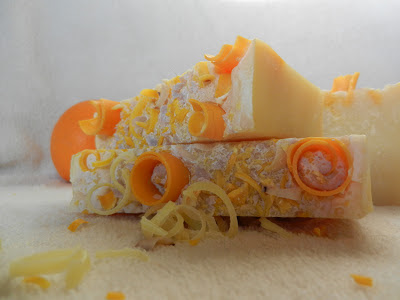
A couple bars of Donna's beautiful soap
When reading the evaluations of last year's conference, "live demonstrations" were one of the requests for the 2013 conference. So, here you go!

We're excited to announce that Donna O'Shaughnessy of South Pork Ranch will be back for the 2013 conference. If you were with us last year, you might remember Donna presenting sessions on grassfed beef and dairy, as well as pastured pork. This year, she'll be presenting these sessions:

Little White Lye ... Cold-Process Soapmaking
Participants will learn the basics of creating real soap from real lye and lard similar to the way our ancestors did ... but so much better and safer. The class will watch the entire soap making process including use of inexpensive molds, oils, clays, herbs, and other plant materials.

This Little Piggy Went To Market
So you've done the hard part of raising your calf, piglet or lamb to market weight. Now what? Learn how to market, price and legally sell your home grown meat direct by the carcass to individual consumers and restaurants or by the package at the local farmers market, and/or all natural grocery store.